A new look, a new site, and a new era for Tile Style.
Tile Style have tiled Lancashire since 1997, for homeowners, for businesses, and for housebuilders like Redrow and Persimmon. The new brand was already drawn when we arrived. What it needed was a website to live in, so we built one on Astro and carried 155 old URLs across without breaking a single one.
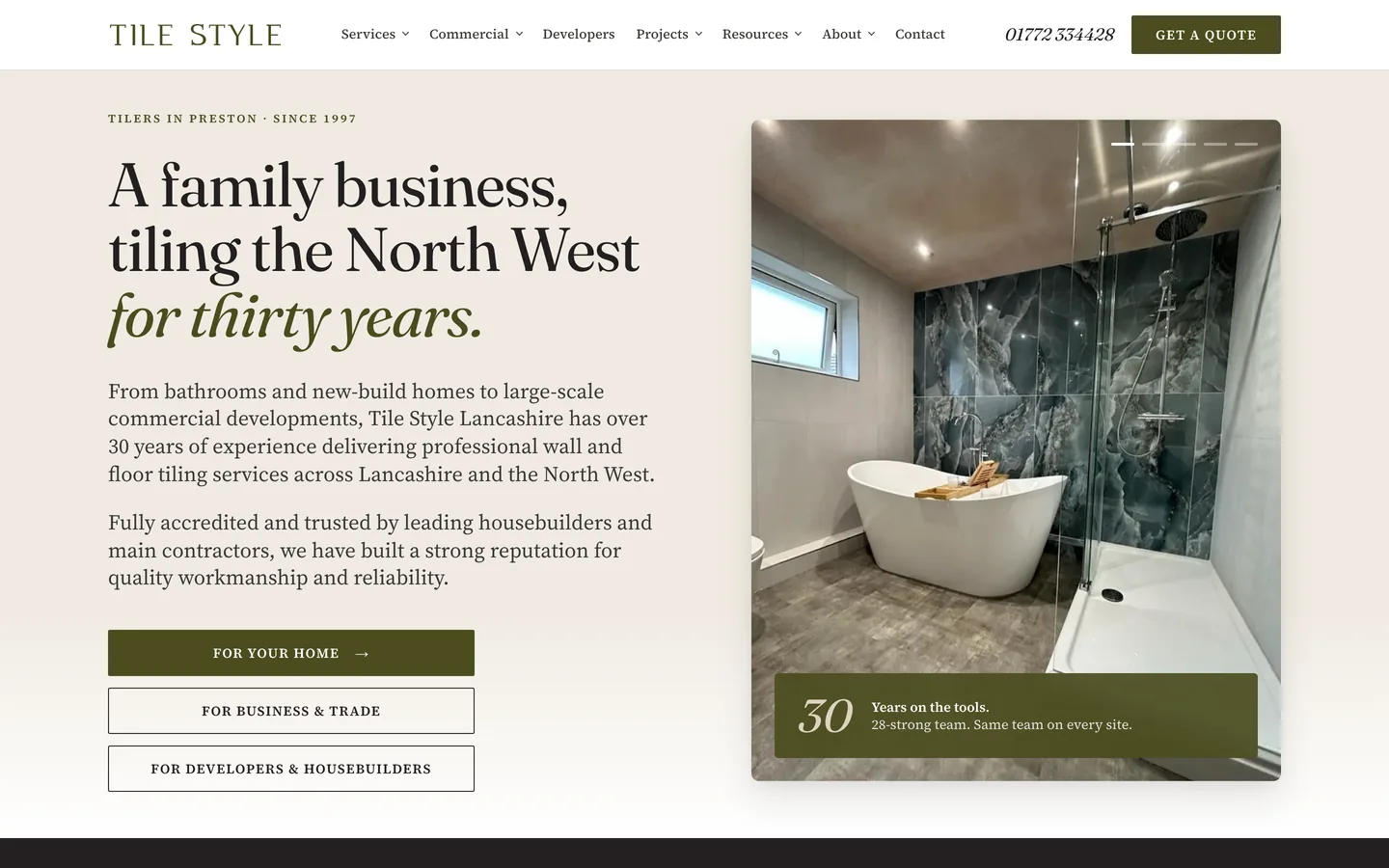

Drag to compare.
The homepage, side by side. WordPress on the left, Astro on the right. Pull the handle.
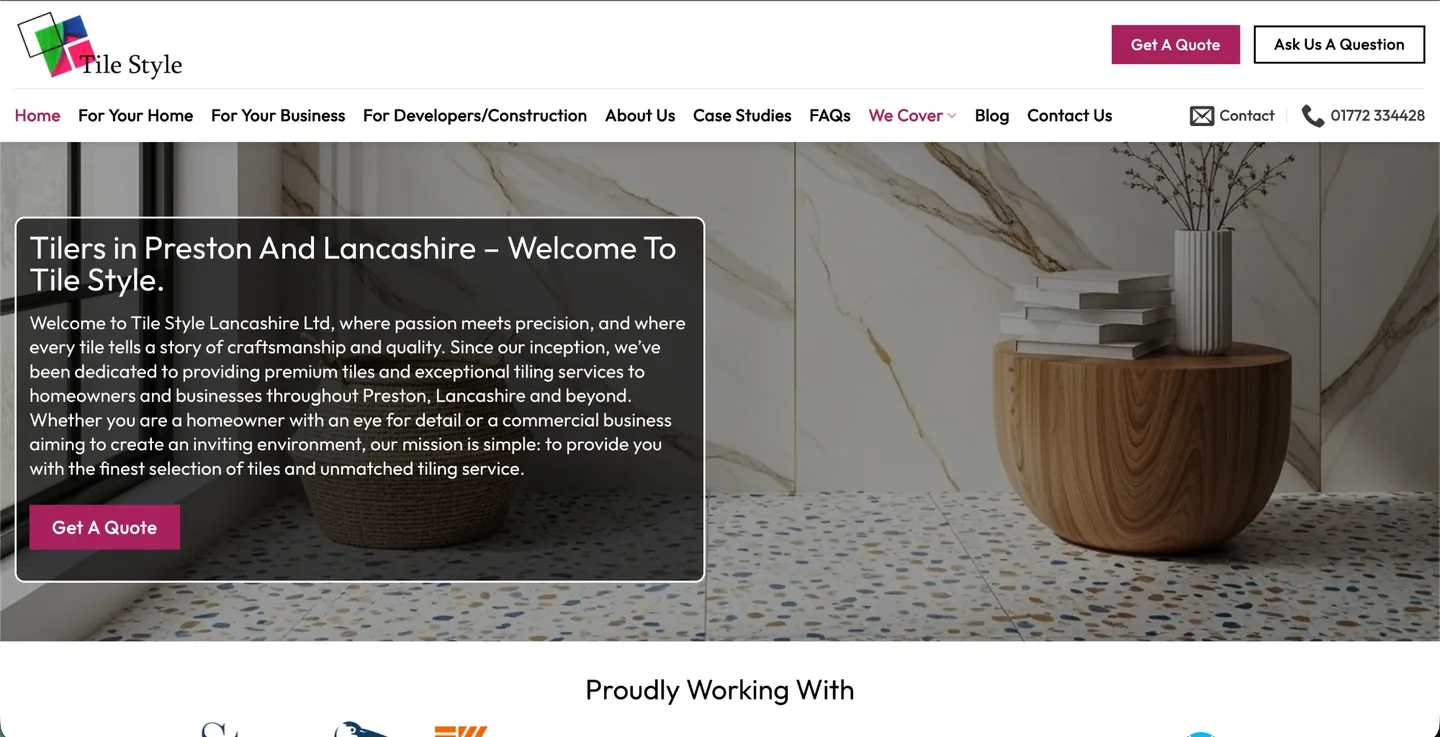
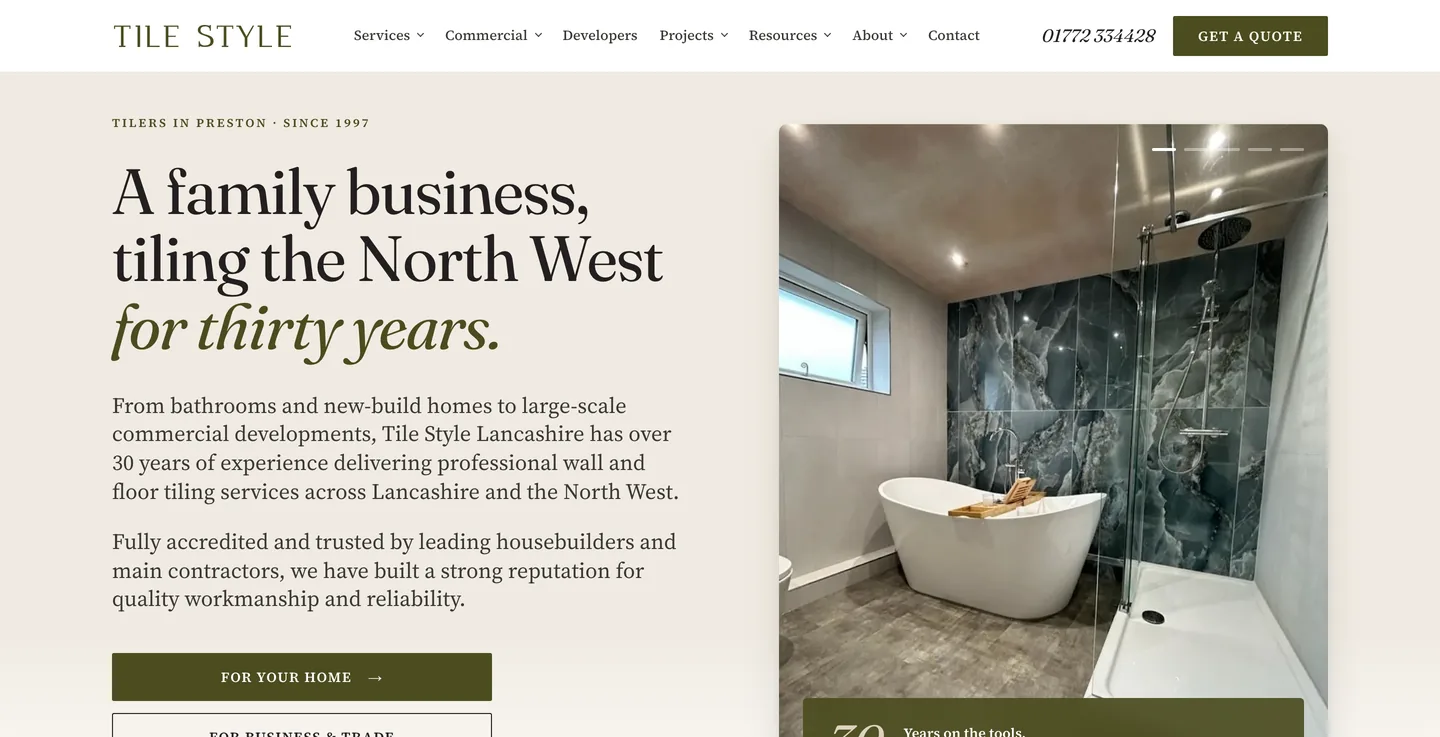 Before After
Fewer pages. Three front doors.
A family firm that had outgrown its website.
Tile Style have been tiling out of Bamber Bridge since 1997. Twenty-eight directly employed tilers, four site supervisors, their own warehouse and their own vans. On a Monday they might be tanking a family bathroom in Penwortham. On a Tuesday, changing rooms at a leisure centre. On a Wednesday, plot forty of an estate for Redrow. The largest single floor they have laid runs to 4,000 m².
The work had grown in every direction. The website had not. It was a competent enough WordPress build, but it spoke to one customer, the homeowner, in one voice. The commercial and new-build sides of the business, which is where the contract values sit, had a page each and almost nothing to say on them.
A procurement manager does not read a blog.
The commercial work was all there. Ten named developments for Redrow, Persimmon, Morris Homes, Eccleston Homes, Jones Homes and Rosslee Construction. Ten more on the commercial side, BAE Systems at Warton and Places for People among them. Twenty projects of a kind most regional tiling contractors could not put together.
It was filed as blog posts. Written like news, titled like news, and sitting under a Case Studies tab that read as a scrapbook rather than a capability statement. The audit found the For Developers page ranking for exactly one keyword in the UK, and that keyword was the company’s own name.
So the new site routes by buyer from the first screen, and the project library carries the same three labels all the way through. The work did not change. What changed is that someone specifying an estate can now find the part of it that is about them.
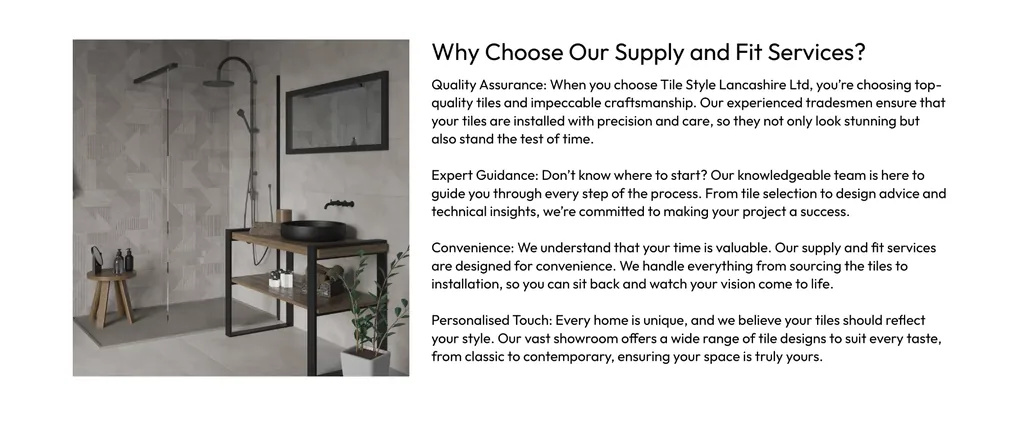
Nothing dramatic. Everything slightly dimmed.
We audited the site in May 2026. No broken pages, no security problems, a crawl health score of 86%, and traffic that had roughly quadrupled in eighteen months. This was not a site in trouble. It was a site doing well for one of its three audiences and almost nothing for the other two, carrying a layer of small WordPress problems that nobody had been paid to go back and look at.
What the audit found
- A For Developers page ranking for one UK keyword: the company name. A For Your Business page ranking for nothing at all. Between them, the two highest-value audiences on the site.
- Thirty-four town pages whose body copy was 97% identical to each other. Same paragraphs, same claims, different town name dropped into the headline.
- Seventy-two pages with no meta description, including every case study, the About page and the Contact page. Google wrote its own, and Google is not a copywriter.
- Five WordPress reusable blocks exposed in
sitemap.xmlas if they were pages, plus two machine-generated author archives under usernames nobody chose. The audit counted four of the blocks. The fifth turned up when we mapped every URL by hand, which is the argument for mapping them by hand. - One claim, copied and then left alone. “Over 25 years” on thirty-six pages and a 10,000 sq ft facility on thirty-four, pasted from town page to town page. Tile Style started in 1997, so by 2026 that sentence was underselling them by four years and had plainly not been read since it was written.
What Tile Style wanted
- The commercial and developer work to be findable by the people who buy it, rather than discoverable by accident.
- To keep the residential rankings they had spent eighteen months building. That traffic pays wages now.
- A site that looked like the standard of the work, and like the new brand they had just paid for. The tiling is immaculate. The website was a template.
- Something they could hand to a procurement manager without having to explain it first.
We cut the site down before we built it up.
The obvious move on a site with two neglected audiences is to add pages. We took 141 down to 110. Thirty-four near-identical town pages became one coverage page listing all 35 towns, with real ones written properly as they are earned. What the site gained instead was depth where a buyer actually stops: ten commercial sector pages, six services written to the substrate rather than the sales pitch, and a project library you can filter to the kind of job you are about to commission.
Every page, redrawn.
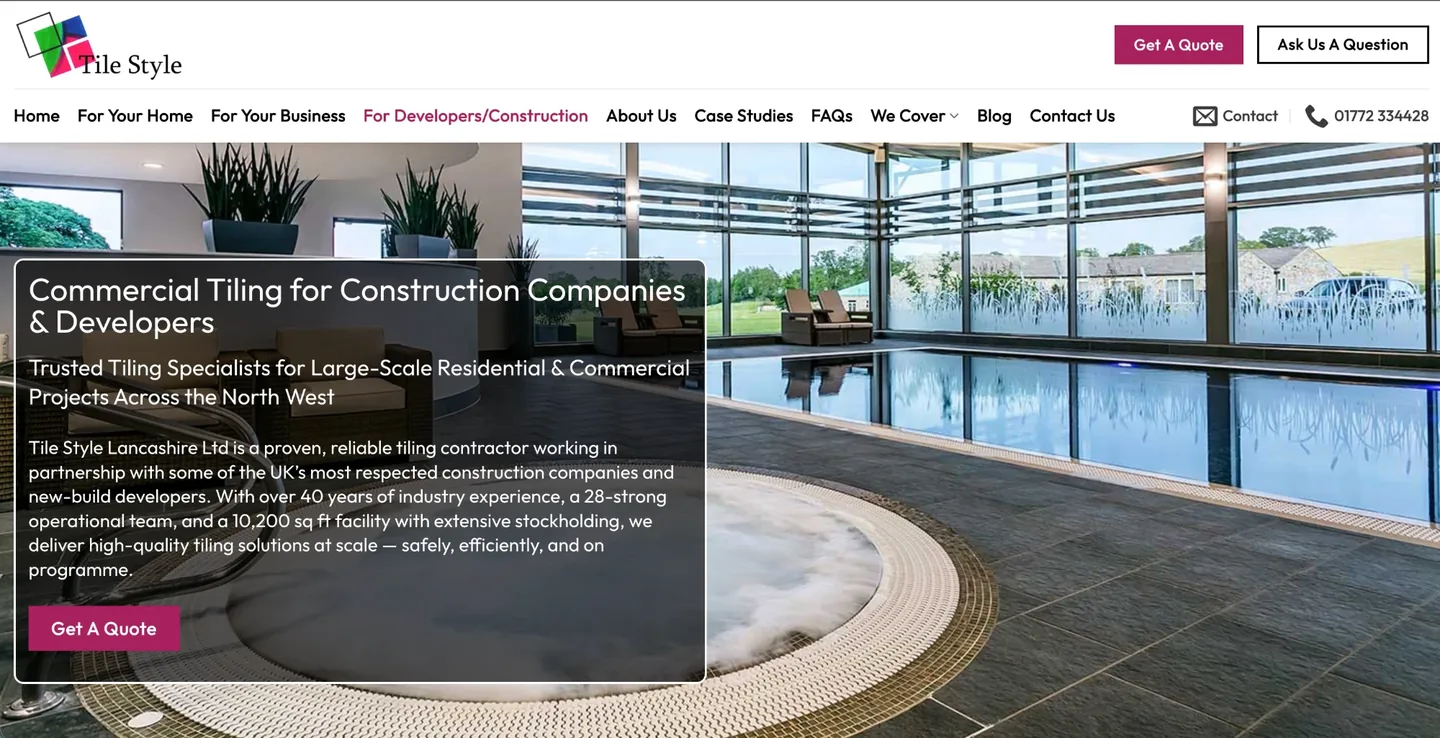
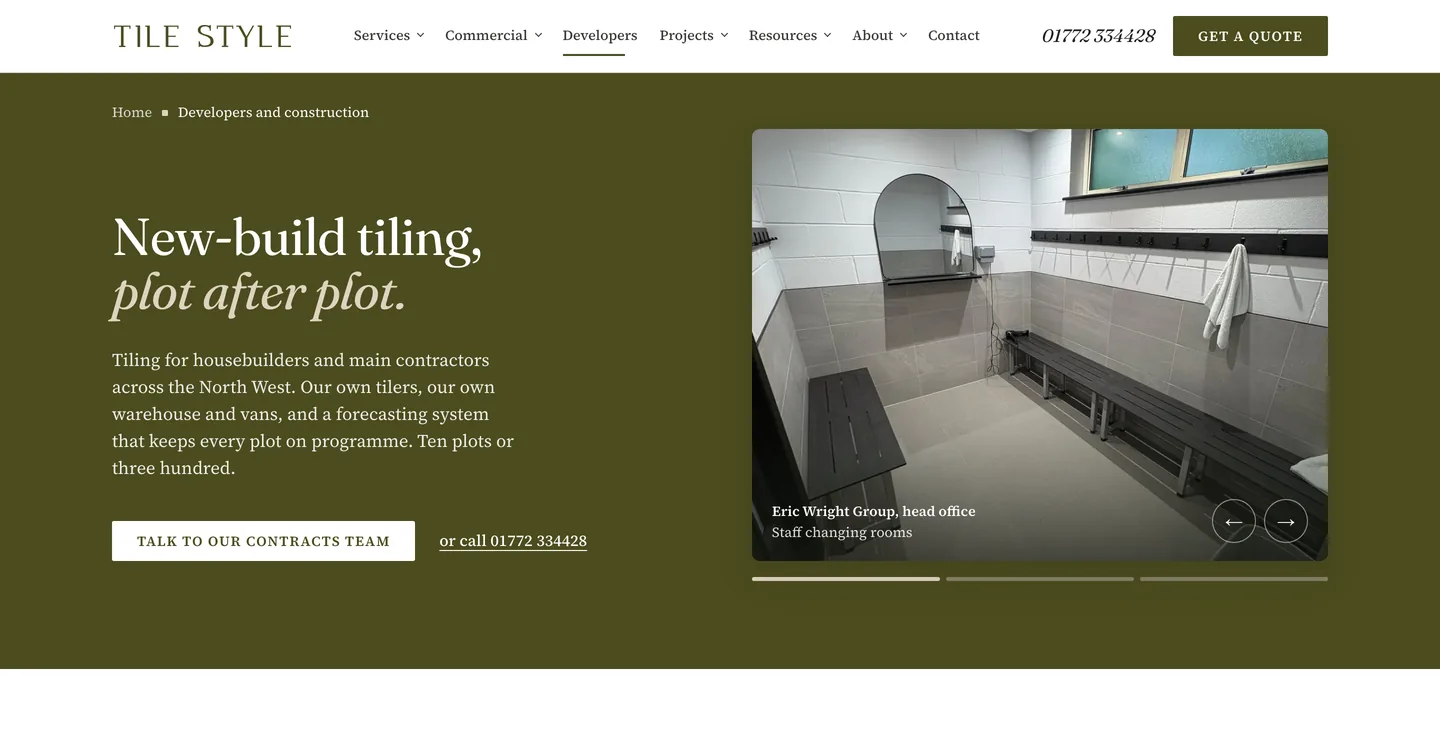
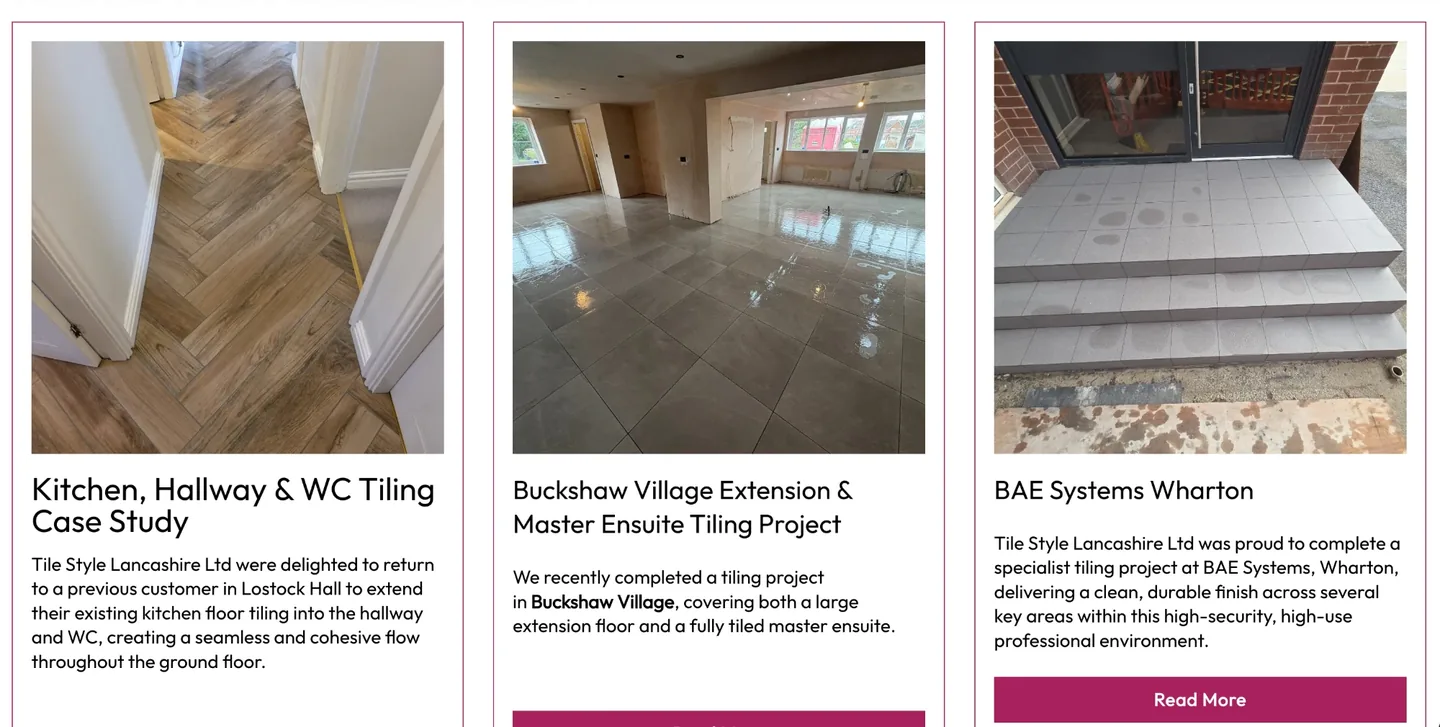
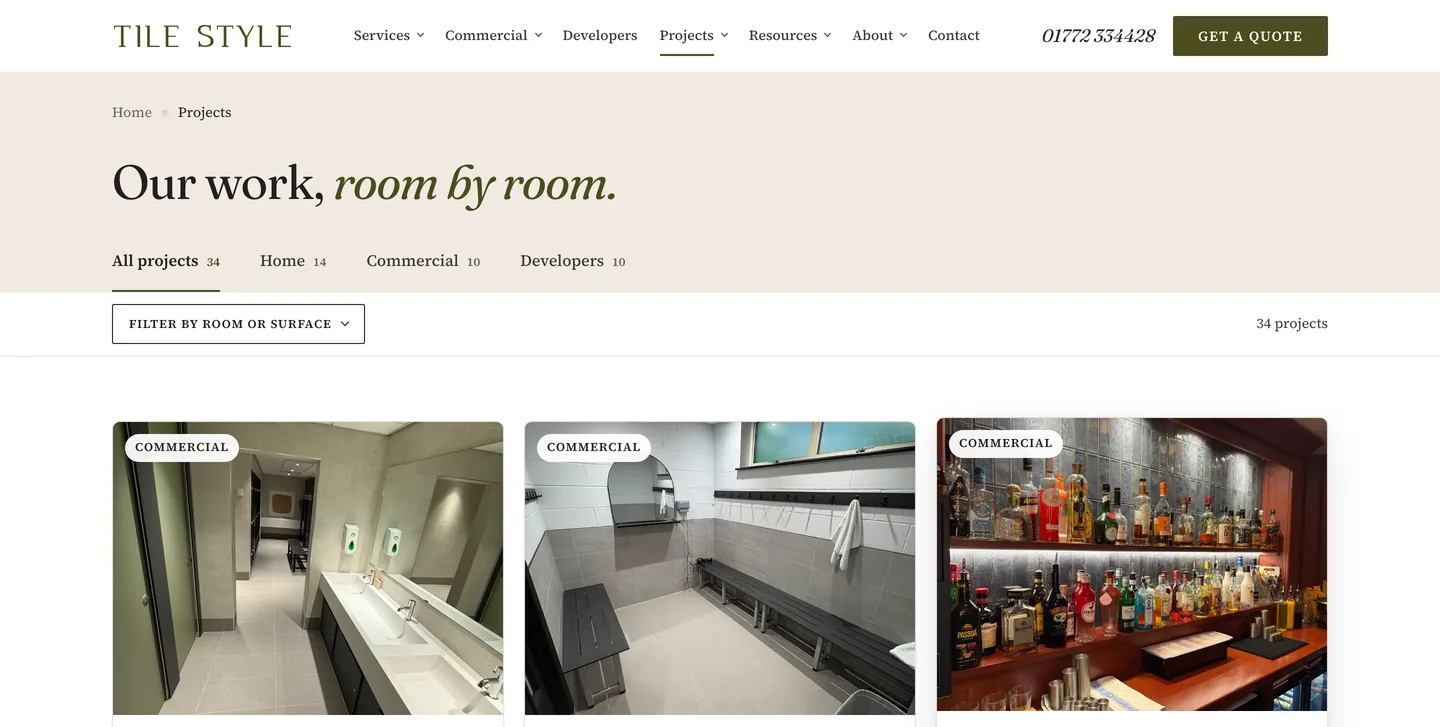
The developers page that ranked for its own name, the project library that used to be a blog, and the contact page, which is the one page on any trade website that has a single job to do.
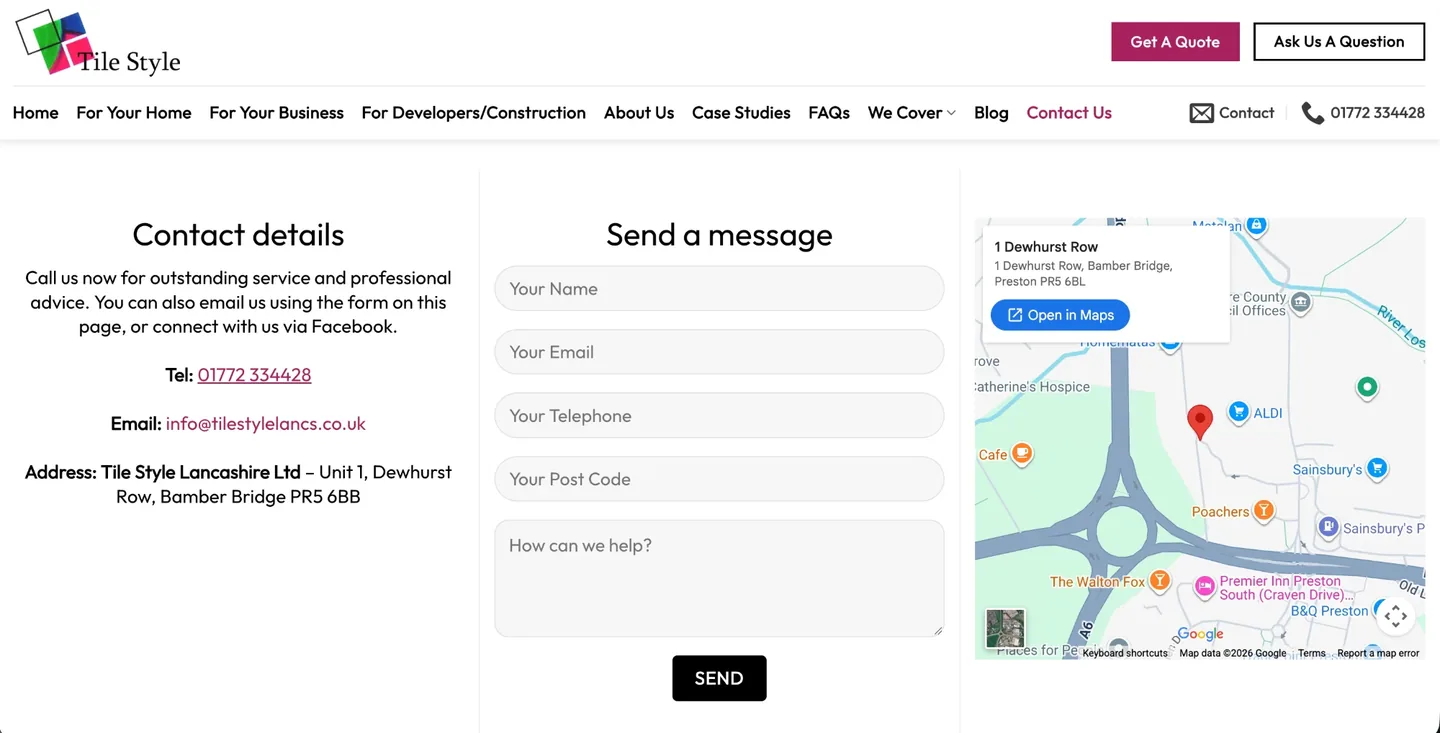
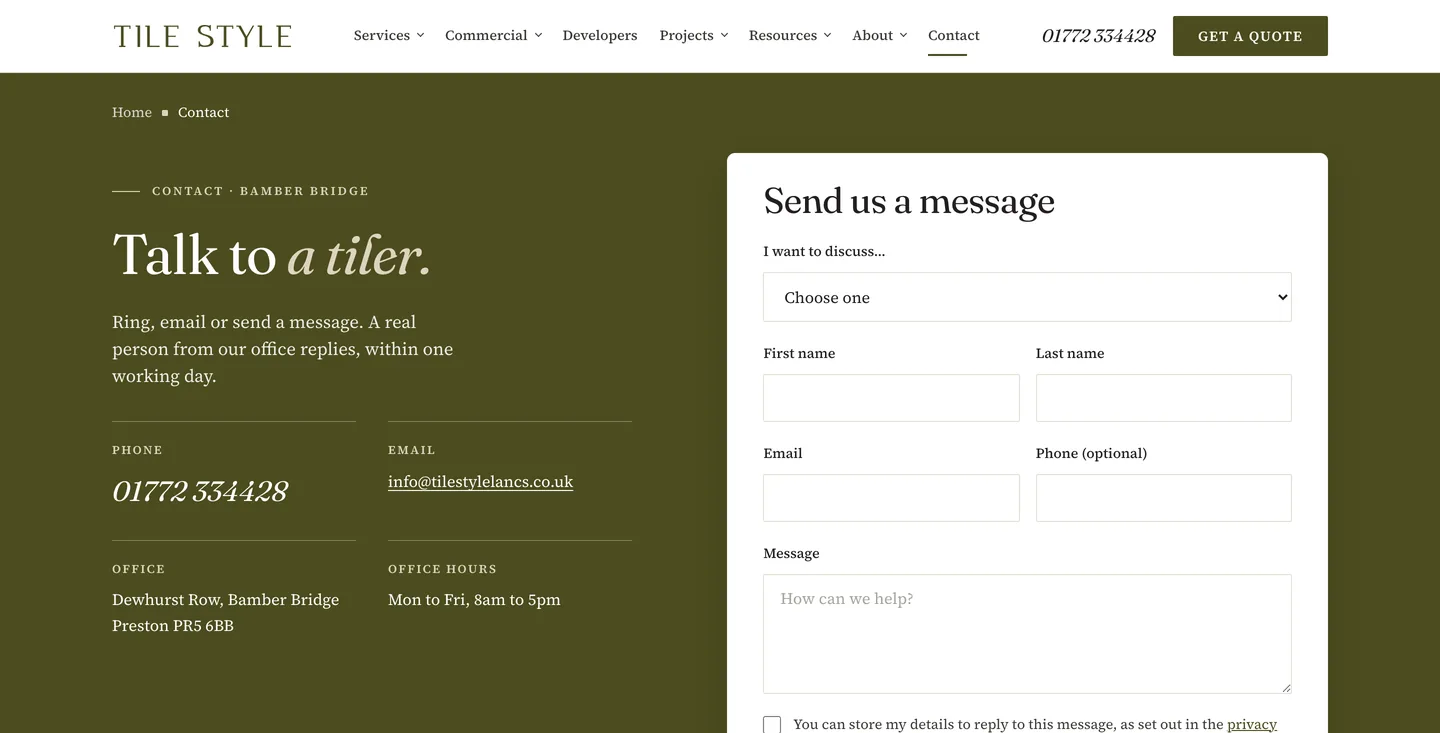
The town pages were the whole argument.
Thirty-four pages, nearly the same words on each, and some of them ranking. Deleting them loses rankings that pay wages. Keeping them keeps the duplication. So they were split on evidence rather than instinct: Search Console data decided which towns had proven demand, and those keep their URL. The rest point at the coverage page with a 302, which is the honest answer to “this page is being written”, and becomes a 200 the day it is.
What the move actually involved
- A zone that had not been touched since February 2021, moved to Cloudflare with the mail, webmail, FTP and SPF records copied across first. The Search Console verification record came with it, so the history did not have to be re-earned.
- The outgoing agency changed two nameservers at the registrar. That was the whole of their involvement, by design, because a cutover that depends on the party leaving is a cutover with a hostage in it.
- Forms moved to Brevo with Turnstile in front of them, and a real test enquiry sent from each of the three forms before anyone went home.
Redirect sweep re-run against the live site on 5 November 2026: 113 × 301, 33 × 302, 5 × 410, 4 × 200. Nothing broken, nothing chained.
Ten sectors, six services, and 110 pages that say what they are.
Nobody asks an assistant for tiling solutions. They ask who tiles a pool surround in Lancashire, what a wet room costs to tank properly, or which contractor can work around a hotel that is still trading. Answering that takes a page per sector, a page per service, and markup tying it all to a real company at a real address.
Lighthouse 13.4, desktop, homepage, 4 November 2026. Largest Contentful Paint 1.7s and cumulative layout shift of zero. There is no before column in that row on purpose: the old WordPress origin went with the DNS, so any “before” score we published now would be a reconstruction rather than a measurement, and we would rather show you nothing than show you that.
This site went live on 28 October 2026. There is no results graph worth putting on this page, and there will not be one for a couple of months. A URL change moves rankings around before it settles them, which is the cost of doing it properly, and the first fortnight of Search Console after a replatform tells you almost nothing except whether the redirects held. They held.
The part of this job we will be judged on is whether the commercial and developer pages start ranking for the terms they were built for. At the time of writing, the For Developers page had one UK keyword to its name. We will put the real numbers on this page when there are some, including the ones that do not flatter us.